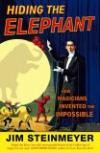
Hiding The Elephant
Jim Steinmeyer
Paperback. Arrow (rand) 2005.
ISBN 9780099476641
Buy from Amazon.co.uk
More books by Jim Steinmeyer
The Secret History of Magic: The True Story of the Deceptive Art
Hardback
2018
Secret History of Magic
eBook
2018
Charles Fort: The Man Who Invented the Supernatural
Paperback
2016
Who Was Dracula?: Bram Stoker's Trail of Blood
Paperback
2014
Who Was Dracula?: Bram Stoker's Trail of Blood
Hardcover
2013
Similar books
Elephant Elephant Where Do You Hide?
Hardcover
2013
The Elephants' Guide to Hide-And-Seek
Hardcover
2013
Hide the Elephant
Hardcover
2013
You Can't Hide An Elephant In A Tree!
Hardcover
2013
Hide the Elephant
Hardcover
2013
Rate the book
Write a review and share your opinion with others. Try to focus on the content of the book.
Read our instructions
for further information.
Hiding The Elephant
Your rating:
Please enter a title for your review
(min 2 words):
Type your review in the space below
(max 1000 words):
Language of the review:
English
Your name
(optional):
Your email address
(not displayed,
only
for verification):
Your review will be displayed within five to seven business days.
Reviews that doesn't follow our
instructions
will not be displayed.
Book reviews
»
Hiding The Elephant
Categories
Address Books & Journals
Art & Architecture
Biography
Business, Finance & Law
Comics & Graphic Novels
Computers & Internet
Crime, Thrillers & Mystery
Fiction
Food & Drink
Health & Family
History
Home & Garden
Horror
Mind, Body & Spirit
Music, Stage & Screen
Poetry, Drama & Criticism
Reference & Languages
Religion & Spirituality
Science & Nature
Science Fiction & Fantasy
Scientific & Medical
Society & Philosophy
Sports & Hobbies
Book reviews
|
Help & support
|
About us